
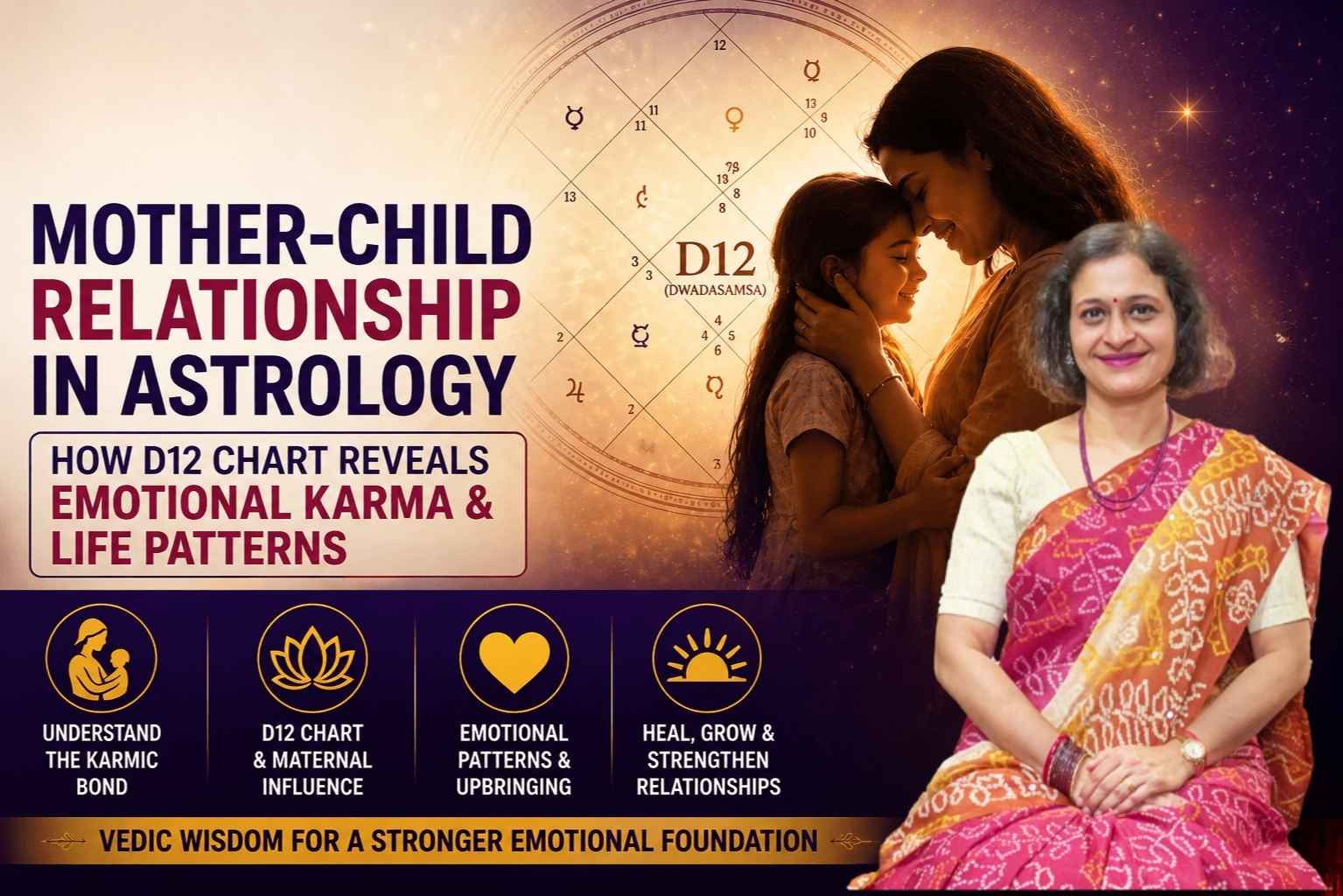
Mother-Child Relationship in Astrology: How D12 Chart Reveals Emotional Karma & Life Patterns
The connection between a child and their mother is the very first emotional experience in life. It builds how we feel safe, loved, and understood. In astrology, this bond is seen as the root of emotional development and inner stability. When this relationship is warm and supportive, it builds trust and confidence in this relationship. However, if it is strained or unstable, it can lead to emotional insecurities. Studying this relationship through astrology helps to reveal the hidden impact that builds the behaviour and the whole characteristic. In this blog, the best Basic Course trainer in Astrology will tell you about the influence of mother and child relation by the astrology.
Role of Astrology in Understanding Maternal Influence
Astrology offers a unique point of view to understand how parental relationships affect our lives. The main birth chart, or D1, gives an overall picture of the mother and the emotional environment during childhood. However, to gain deeper insight, astrologers study the D12 (Dwadasamsa) chart, which focuses specifically on parents and family ancestry. This chart reflects inherited characteristic, emotional conditioning, and the type of support one receives. Together, these charts help us understand how early experiences with the mother influence our mindset, emotional responses, and personal growth.
Key Astrological Indicators to Analyse
Certain planetary placements and houses are especially important when analysing the mother-child relationship. The 4th house and its ruling planet represent the mother, home environment, and emotional comfort. The Moon, known as the natural indicator of nurturing, shows how we receive and express emotional care. If the ruler of the 4th house is placed in the 6th house, it may point to karmic obligations or challenges in the relationship. Additionally, retrograde planets usually suggest deep karmic ties, indicating unresolved emotional patterns that may need attention and healing. If you want to know the techniques to find out the relation through divisional charts, then you have to join the best Divisional Chart Course, and make yourself knowledgeable about this chart analysis.
Importance of D12 Amsha Rulers
Within the D12 chart, specific Amsha rulers provide further clarity about the nature of the relationship with the mother. These include Ashwini Kumars, Ganesha, Yama, and Ahi (Sarpa). Each carries a symbolic meaning. For instance, Ahi (Sarpa) is linked to intense and sometimes difficult emotional bonds, usually reflecting karmic burdens or struggles. On the other hand, Yama represents discipline, authority, and control, suggesting a strict or structured raising. These rulers help astrologers understand the emotional tone and karmic depth of the maternal relationship.
Real-Life Case Insights
Practical examples make these concepts easier to understand. In some cases, people may experience a strict but supportive mother who encourages responsibility from a young age. This can lead to maturity and success later in life. In other situations, challenging placements such as a weak or afflicted 4th lord can create misunderstandings, emotional distance, or conflict. These differences show how the mother’s influence can either build inner strength or create emotional struggles that need to be resolved over time.
Final Verdict
The D12 chart provides insight into the karmic connection between a child and their mother. By understanding these patterns, people can become more aware of their emotional triggers and relationship habits. This awareness opens the door to healing, growth, and stronger connections. Ultimately, recognising the impact of the mother-child bond helps create a more balanced emotional life and a stronger grip in relationships in the future. If you want to know the influence of the divisional chart on parental bondings, then you can join the best Divisional Chart Course by Astro Anuradha, and learn the relationship through the divisional chart.
Also Read: Why Do Divisional Charts Matter in Vedic Astrology Readings?
Leave a Reply