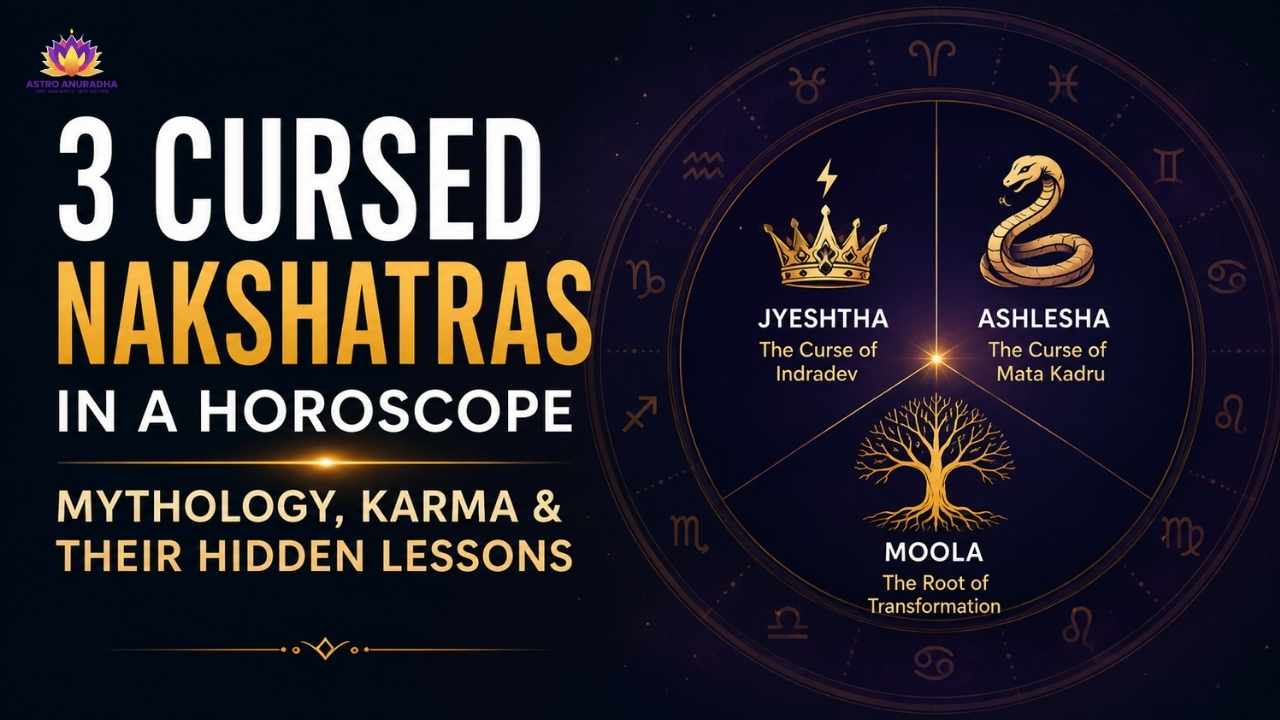
3 Cursed Nakshatras in a Horoscope: Mythology, Karma & Their Hidden Lessons
In Vedic astrology, every Nakshatra carries unique energies, blessings, and karmic lessons. While no Nakshatra is inherently “bad,” some are traditionally associated with powerful myths, curses, and challenging life experiences. These associations come from ancient scriptures and symbolic stories rather than certainties about a person’s destiny. If you wish to understand these celestial influences in depth, enrolling in a Nakshatra Course or opting for an online astrology consultation in India can provide valuable insights.
Jyeshtha Nakshatra – The Curse of Indradev
Jyeshtha Nakshatra is ruled by Indradev, the king of the Devas, who is known for his authority, power, and leadership. However, mythology also associates Indra with one of the most controversial incidents involving Ahalya and Gautam Rishi.
According to the legend, Indradev disguised himself as Gautam Rishi to deceive Ahalya. When Gautam Rishi discovered the deception, he cursed Indra, causing him to suffer humiliation and the consequences of his actions. This story symbolizes how misuse of power, uncontrolled desires, scandals, and womanising tendencies can lead to downfall.
People strongly influenced by Jyeshtha Nakshatra may experience lessons related to ego, authority, relationships, and personal integrity. The Nakshatra teaches that true greatness comes through self-discipline rather than dominance.

Ashlesha Nakshatra – The Curse of Mata Kadru
Ashlesha Nakshatra is represented by the Nagas (serpents) and is deeply connected with mystery, intuition, transformation, and hidden emotions.
Its mythology is linked to Mata Kadru, the mother of serpents. Due to the disobedience of many of her serpent sons, Kadru cursed them, leading to their destruction in the famous Sarpa Yajna. This curse became a powerful symbol of inherited karma, hidden fears, emotional entanglements, and family patterns.
Ashlesha natives are often believed to possess immense spiritual depth and psychological strength. However, they may also face challenges involving trust, attachment, manipulation, or emotional intensity until these karmic lessons are understood.
Moola Nakshatra – The Root of Transformation
Moola Nakshatra is often considered one of the most misunderstood Nakshatras in Vedic astrology. Ruled by Nirriti, the goddess associated with dissolution, it signifies uprooting old karmas to create new beginnings.
Traditionally, Moola has been linked with beliefs surrounding widowhood (loss of spouse) in certain horoscope combinations. However, modern astrologers emphasise that such outcomes cannot be predicted based solely on one Nakshatra. A complete horoscope analysis is always essential.
Moola is also associated with intense anger, deep emotional transformations, and the ability to destroy unhealthy attachments. Individuals born under this Nakshatra often undergo significant life changes that ultimately lead to spiritual evolution and inner strength.
Understanding the Deeper Meaning
The term “cursed” should never be interpreted as a lifelong punishment. In Vedic astrology, these stories represent karmic lessons rather than fixed destinies. Every Nakshatra offers opportunities for growth, awareness, and transformation when understood correctly.
If you wish to decode the deeper meaning of your birth chart, a professional horoscope consultation in India can help you understand your karmic patterns with clarity. You can also master the ancient wisdom of Nakshatras through Astro Anuradha’s Nakshatra Course or choose an online astrology consultation in India to receive personalised guidance and practical remedies. However, understanding your Nakshatra is not about fearing destiny—it is about empowering yourself with timeless Vedic knowledge.
Also read: The Untold Secrets of the 12th House in Astrology
Leave a Reply